
AI-generated voice
Contents
There is a version of you that you have caught glimpses of. In the moments when the noise, the doubt, and the weight of other people’s opinions fell away, you were simply present—fully alive, operating at the edge of your potential with a clarity that felt like flow. That version of you is not an accident. It is the result of specific inner conditions, and those conditions can be trained.
Mental performance is connected: mind, body, soul, and craft. The same inner work that allows someone to perform under pressure can help them regulate emotion, recover from setbacks, build stronger relationships, and create a life defined by presence, purpose, and earned confidence.
For generations, this kind of training has been reserved for the few: the elite athlete with a world-class performance psychologist, the executive with a private coach, or the rare individual with the access and resources to do the work at the highest level.
The rest of the world has been left without it. And the cost of that absence is staggering.
Our belief is simple: giving people access to the same mental and emotional strength training tools that world-class athletes use is one of the most powerful contributions we can make to the mental health crisis of our time.
The problem
The World Health Organization estimates that depression and anxiety cost the global economy approximately $1 trillion each year in lost productivity and contribute to 12 billion lost working days. The burden reaches families, teams, schools, healthcare systems, and organizations in every part of society.
Most support begins after someone is struggling badly enough to enter formal care. Therapy and clinical treatment are essential, but they are not designed to provide continuous, everyday development for everyone. They cannot be the only way people learn to understand themselves, regulate pressure, build confidence, or recover from difficulty.
Many people will never enter a therapist’s office. Others need support between appointments, before a challenge becomes a crisis, or in the exact moment when they must act. The missing layer is not another content library. It is an ongoing system for building mental and emotional strength in the context of real life.
The cost of a gap in support
Depression and anxiety carry a substantial annual burden.
Even in high-income countries, most people with depression receive no treatment.

Why support has to be personal
The problem beneath the problem is that people are wired differently. Our histories, temperaments, habits, goals, and circumstances shape how we respond. The same advice can help one person and miss what another needs. What we need can also change over time.
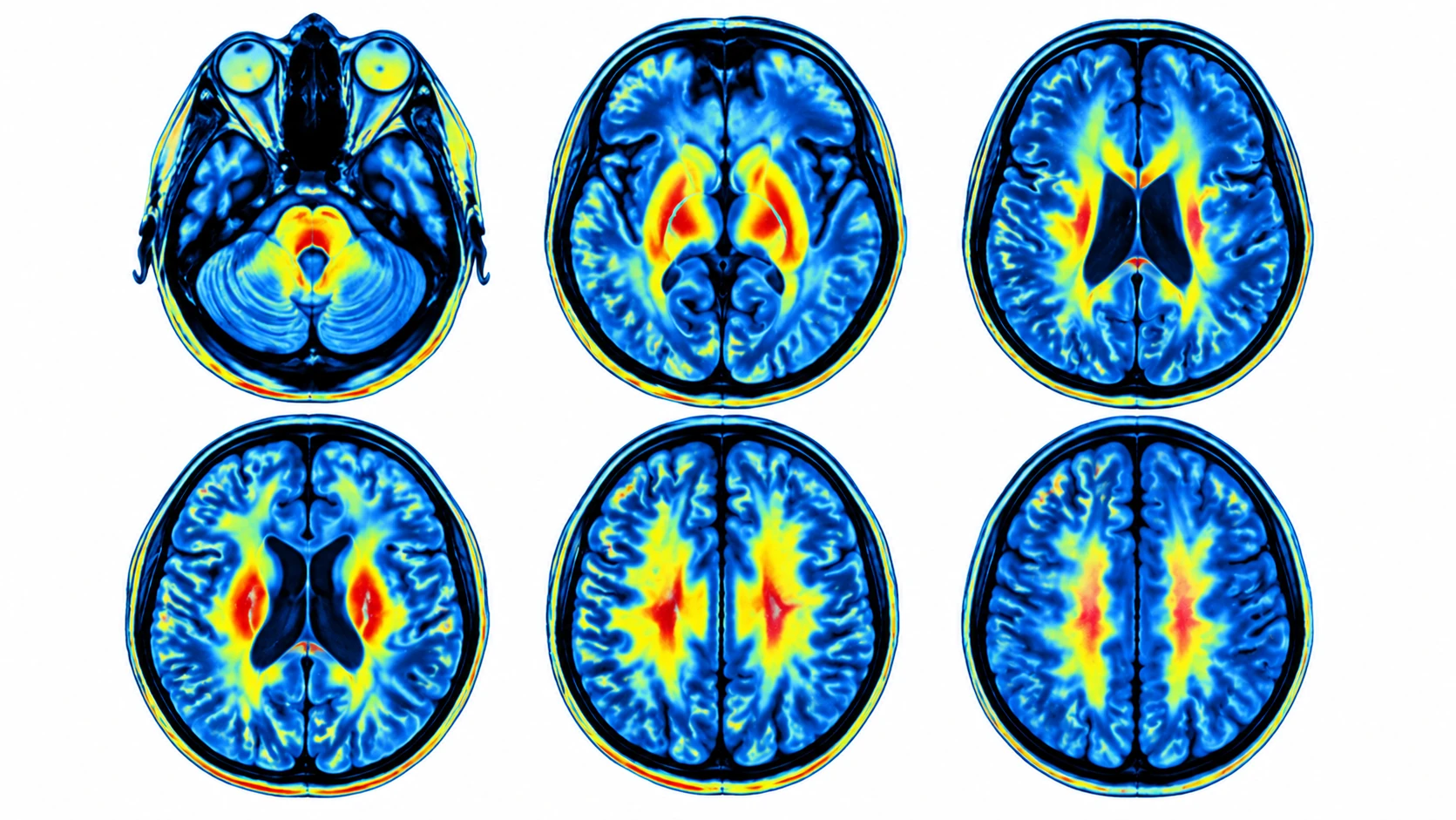
Two people may both say they lack confidence. One may need encouragement to act. The other may need to build a specific skill before taking the next step. The words are similar. The useful response is different.
Static content cannot respond. Books, videos, and courses can teach valuable ideas. But a fixed lesson cannot ask a follow-up question, notice what someone is avoiding, adjust to their circumstances, or check whether its advice helped. The reader has to work out what applies and how to use it.
Good one-to-one coaching can adapt. A coach can listen, challenge assumptions, adjust the approach, and follow through. That attention takes time. Each coach can support only so many people, and cost and availability limit access.
AI makes conversation available on demand. People are already using it for psychological support.
of surveyed U.S. adults with an ongoing mental health condition who had used a large language model in the past year reported using one for psychological support during that year.
Source: Rousmaniere et al., Practice Innovations (2025). Online survey of U.S. residents aged 18–80. Rounded from 48.7%. This measures reported use, not effectiveness.
The challenge is to make support both available and personal: able to understand the individual, adapt over time, and help turn insight into action.
People Are Turning to Generic AI. It Is Not the Answer.
People are already turning to AI for advice, reflection, and emotional support. The demand is real. But a general-purpose model is not a coaching system.
Out of the box, AI can reward agreement, provide comfort without direction, and respond without a trusted memory, an agreed plan, approved methods, or evidence of progress. Research has shown that sycophantic AI can reduce prosocial intentions and increase dependence.1
More affirmation. Less willingness to repair.
Effects of overly agreeable AI in a live conversation experiment.

A system with no durable model of the person cannot reliably know who needs to be challenged, who needs to be steadied, what commitment is due, or whether the last intervention worked. It responds to the prompt and moves on.
Mastery was built to close that gap: to combine the accessibility of AI with the memory, judgment, structure, methods, and follow-through of world-class coaching.
1. Cheng et al., 2026, Science. doi:10.1126/science.aec8352
Introducing Mastery
Built in sport. Built for the world.
Mastery is a mental strength and craft development system built with performance psychologists and coaches whose experience spans the NFL, MLB, NBA, F1, and MLS.
We bring their knowledge, methods, and judgment into personalized coaching and training for individuals, teams, and organizations. Mastery develops two connected areas:
Mastery of Self. The mental and emotional strengths that shape how someone performs and lives: confidence, focus, resilience, emotional regulation, discipline, and purpose.
Mastery of Craft. The knowledge, skills, judgment, and execution required to excel in a specific discipline. A quarterback develops decision-making. A leader practices difficult conversations. A salesperson improves discovery and objection handling.
Mastery combines expert knowledge with an evolving understanding of each person to weave personalized coaching, education, and practice into daily life.
Ways to Use Mastery
iOS App. The delivery system for Mastery’s coaching, adaptive programming, and personalized tools. Individuals use it directly, and it delivers the experiences created through Custom Builds and Mastery Studio.
Custom Builds. Tailored Mastery experiences built around an expert’s methods or an organization’s knowledge, culture, goals, and people.
Mastery Studio. The workspace where leaders and coaches manage the knowledge, people, programs, and weekly direction that shape each person’s experience.
iMessage Command Center. Individuals can continue their coaching conversations through iMessage. Leaders and coaches can share voice notes, documents, and links to update knowledge, set weekly themes, and direct programming.
The app, Studio and iMessage share the same memory, Living Profile, and ongoing coaching context.
An obsession with the art of coaching
Building emotional intelligence.
The greatest coaches in the world carry something that cannot be taught in a classroom. It is developed over thousands of hours with real people in real moments. The ability to hold someone's full complexity—their history, their fears, their blind spots, the thing they cannot say out loud—and meet them exactly where they are.
It is the coach who notices the shift in your voice before you do. Who reads the gap between what you say and what is true. Who knows when to push and when to hold. That capacity—that profound attunement to another human being—is the highest form of the craft.
Mastery is built by people obsessed with that art. Our mission is to develop a system that can sense, read, and adapt to you in real time, responding to what you need in the moment. This requires a machine with extraordinarily high emotional intelligence. And it requires memory, voice and behavioral analysis, biometric sensing, coaching reasoning, and real-time adaptation working together in a single system.
The following components form Mastery’s coaching architecture. Together, they shape how the system understands the person, interprets the moment, and decides how to respond.
How Mastery chooses the next coaching step
-
Understand the situation
- Coaching knowledge
- Expert principles, methods, and exercises.
- The person
- History, goals, and patterns remembered in the Living Profile.
- The moment
- What is happening now and how the person is responding.
-
Choose what will help now
The Decision Engine chooses whether to explore, challenge, teach, prepare, or move into action.
An immediate setback may take priority over a planned lesson.
-
Give the person a useful next step
A coaching conversation, a personalized exercise, or an action to take in daily life.
Follow up and adapt. Responses and outcomes update the Living Profile and inform the next coaching decision.
Expert Knowledge Base
Our proprietary knowledge base is built on expertise earned in the trenches at the highest levels of sport, backed by rigorous research and performance science.
It includes principles, methods, decision rules, and exercises, with clear guidance on when to apply them. This provides the foundation for evaluating a person’s needs and selecting an appropriate coaching approach.
Living Profile and Memory
Our Living Profile is a continuously updated model of the person across mind, body, soul, and craft. It connects their history, relationships, beliefs, strengths, behavioral patterns, goals, and current state with the wider context of their life. Conversations, assessments, calendars, documents, connected apps, biometrics, and sport or workplace systems deepen that understanding.
Our memory architecture combines structured personal data, a temporal relationship graph, psychological models, and memory of the coaching itself. It connects experiences across time while preserving their sources and distinguishing facts from interpretations. Competing explanations remain open to new evidence, and corrections update the conclusions built from them.
For each interaction, contextual retrieval brings forward what matters now, connecting long-term patterns with recent experiences and upcoming demands.
Sensing and Interpretation
Our sensing architecture combines language, voice, speech patterns, behavior, and biometric data to help understand changes in the person’s current state.
Voice and speech analysis examines features such as pace, pitch variation, pauses, and word choice. Wearable inputs add context such as sleep, heart rate variability, and activity. Together with conversation and assessments, these signals can help identify changes associated with stress, emotional well-being, and readiness.
The signal beneath what you say
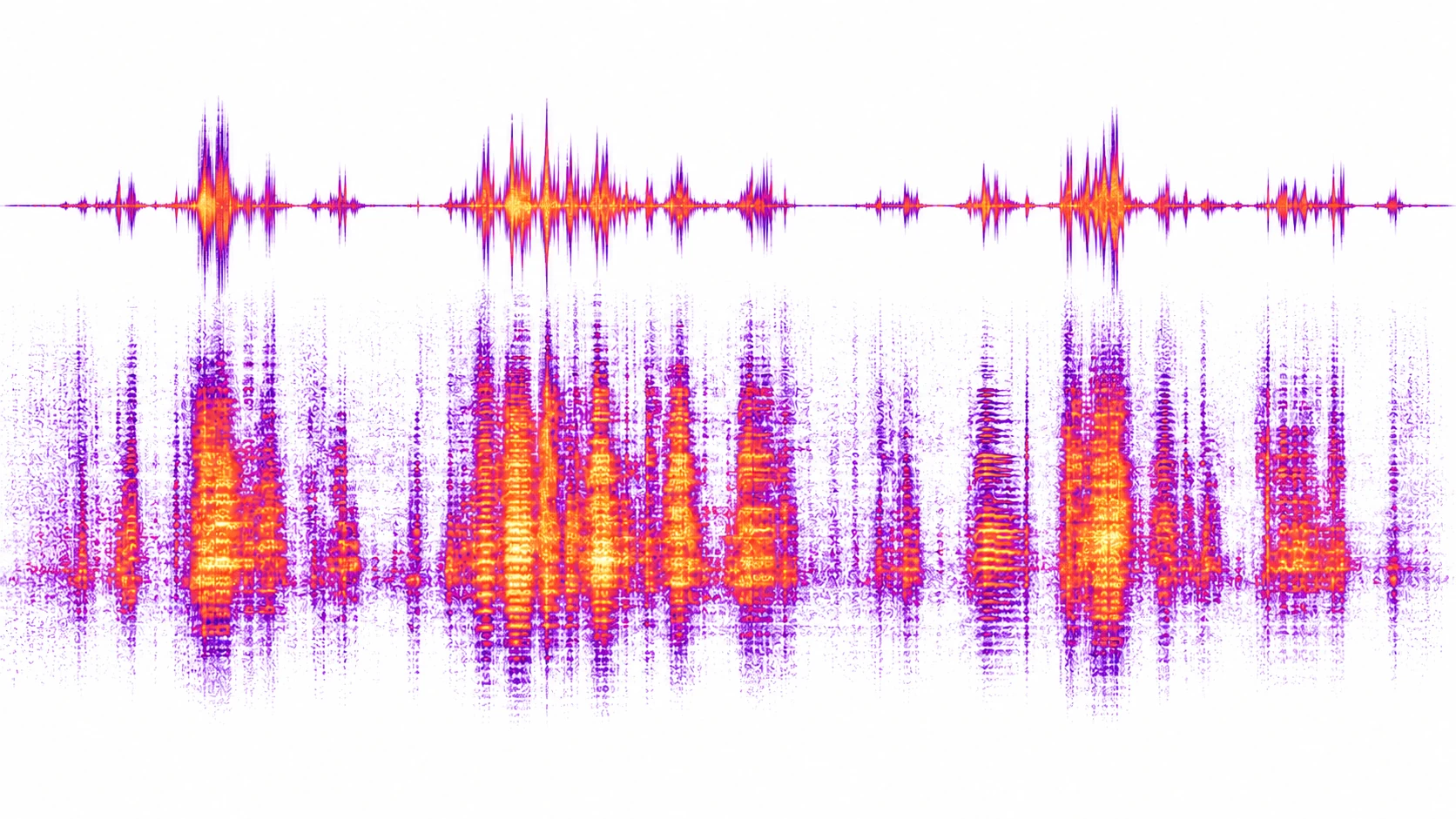
The architecture weighs signal quality, timing, and agreement across sources against the person’s baseline and life context. A change from someone’s usual pattern can carry different meaning from the same signal viewed in isolation.
Incongruence Detection
Our Incongruence Detection Engine identifies gaps between what someone says, how they respond, and what they do over time.
Someone may say everything is good while changes in their voice, sleep, or behavior suggest something worth exploring. Mastery brings that observation into conversation, creating an opening to understand what is happening and work through it together.
Clinical Reasoning and Performance Evaluation
Our evaluation layer applies expert frameworks across goals, performance, behavioral patterns, emotional regulation, beliefs, and underlying experiences to examine what may be helping or limiting the person.
A recurring performance struggle may involve a skill gap, preparation, fatigue, fear of judgment, or several factors together. The evaluation identifies possible contributing factors and what needs further exploration. Clinical reasoning informs the coaching; this layer does not establish a clinical diagnosis.
The Decision Engine
Our Decision Engine turns this understanding into the next coaching move. It weighs the person’s goals, readiness, real-world circumstances, and program progression to choose when to explore, challenge, teach, prepare, or move into action.
An immediate setback may take priority over a planned lesson. An approaching competition may call for rehearsal. A recurring struggle may warrant deeper exploration. Mastery adjusts the approach as the person responds.
Adaptive Programming and Tools
More than 100 research-backed, progressive programs span Mastery of Self and Mastery of Craft, developing the foundations of high performance alongside skills specific to a sport or profession.
Each program defines the destination, progression, science, practices, and evidence of mastery. Mastery adapts the sequence, intensity, and delivery to the person’s progress and the moment or season they are in.
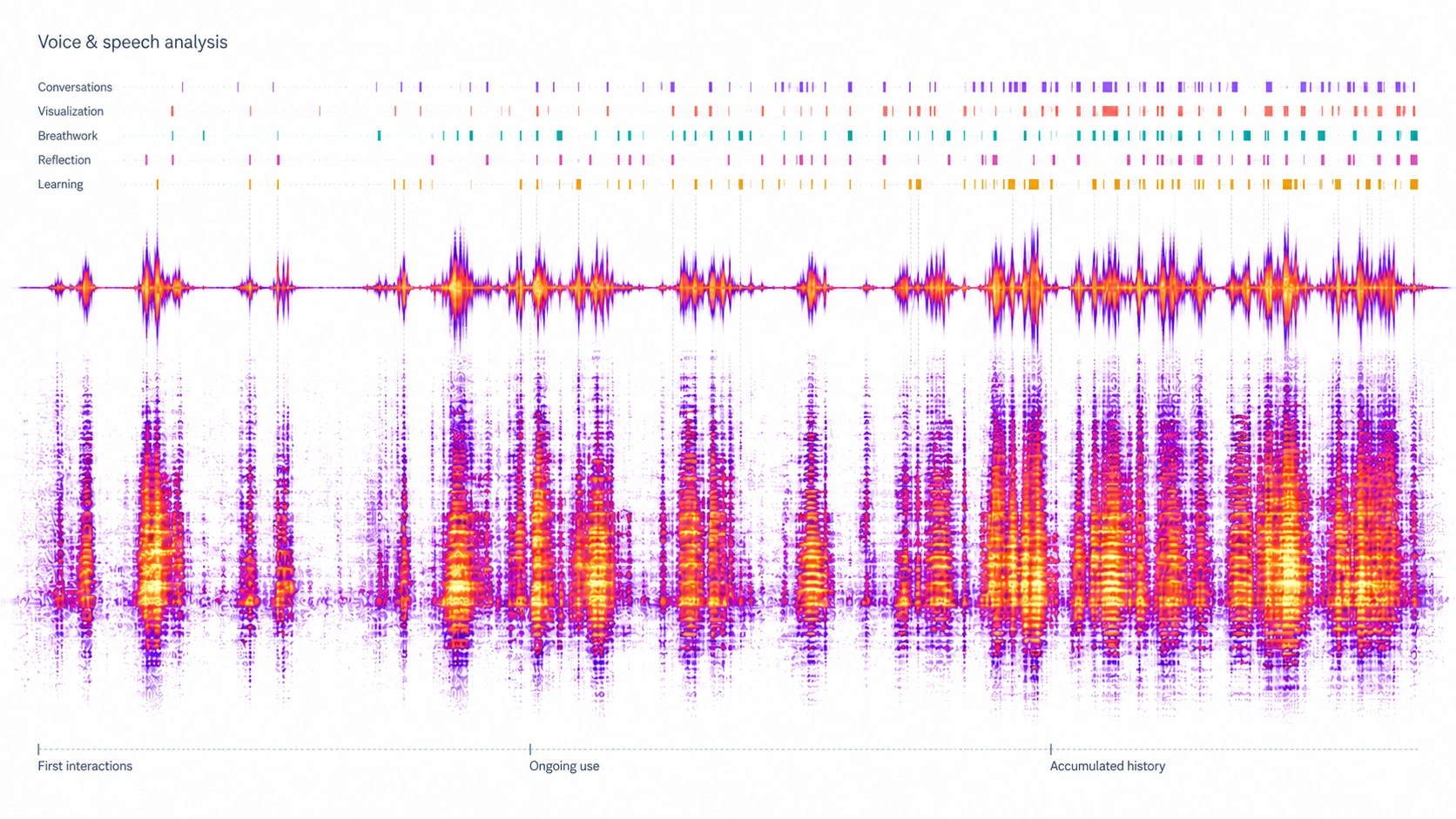
Mastery draws from a complete set of tools. Each can support the program’s progression or respond to something happening today:
- General Coaching Conversations.
- Support for whatever the person is facing.
- Deep Work Conversations.
- Structured sessions that explore beliefs, emotions, patterns, and underlying causes.
- Coach M Audio Notes.
- Short personalized messages that encourage, challenge, explain, or prepare someone for an upcoming moment.
- Interactive Education.
- Guided lessons and exercises that develop knowledge, skills, and judgment.
- Real-World Activities.
- Specific actions that put learning into practice, with clear instructions and follow-up.
- Personalized Visualizations.
- Mental rehearsal built around the person’s goals, language, craft, and upcoming situations.
- Personalized Meditations.
- Practices for attention, emotional regulation, confidence, recovery, and sleep.
- Breathwork.
- Protocols to calm, reset, activate, focus, or recover.
- Daily Check-Ins.
- Quick assessments of mood, energy, readiness, and progress.
- Accountability Check-Ins.
- Follow-up on agreed actions to understand what happened, identify obstacles, and adjust the plan.
- Journaling.
- Guided reflection that turns experience into insight.
- Personalized Audiobooks.
- Original audio chapters that explore relevant ideas through stories, examples, and reflection.
- Book Summaries and Linked Notes.
- Key ideas from books, connected to saved highlights, personal reflections, and coaching.
- Assessments and Program Placement.
- Structured assessments that help establish priorities and an appropriate program starting point.
- Personal Operating System.
- Connects vision, purpose, goals, habits, tasks, and calendar into one living plan. Guided workshops help the person build or rethink that plan, while conversation lets them update priorities, manage tasks, and adjust their schedule.
A self-improving emotional intelligence system
Our improvement architecture connects the process, experience, and results of coaching: what Mastery tried, why it chose that approach, how the person experienced it, and what followed. It supports three connected levels of learning.
Personal adaptation. Refining how Mastery coaches each person: how directly it communicates, when it challenges, how deeply it explores, and which tools and practices help in different circumstances.
System improvement. Evaluating patterns across coaching interactions to identify improvements to reasoning, memory, conversations, tools, and programming. Proposed changes are tested against the existing approach before adoption, with the ability to reverse changes that reduce quality.
Recursive improvement. Applying evaluation to the improvement process itself. The architecture tracks which explanations of failure were accurate, which experiments were useful, and which changes improved coaching. Those findings inform how future improvements are identified, developed, and tested.
The standard is whether Mastery makes better coaching decisions, delivers a better experience, and helps people make meaningful progress in their lives and craft.
A custom Mastery for every organization
Every company or team has its own culture, values, language, methods, standards, expertise, and hard-earned lessons. Most of that intelligence is scattered across people, documents, meetings, messages, and systems.
Mastery brings together three forms of intelligence:
The Organization. What the company or team knows, believes, teaches, and expects.
The Individual. Who the person is, what they are working toward, what is happening now, and how they are progressing.
The Coaching System. The science, methods, judgment, and tools required to turn knowledge into development.
Shared direction. Individual development.
The organization
Knowledge, culture, standards, and weekly direction.
The individual
Goals, circumstances, readiness, and progress.
The coaching system
Science, methods, judgment, and tools.
Personalized coaching
One shared direction, adapted to each person’s life and craft.
Mastery can ingest documents, presentations, books, links, audio, video, screenshots, and conversations, then organize what matters into a structured knowledge base. The result is not another repository. It is a living coaching system that can put the organization’s best thinking to work with each person every day.
Studio gives leaders and coaching staff direct control of the shared intelligence layer. They can review what Mastery has learned, organize principles and methods, correct or remove material, and decide what the system is allowed to use when coaching the team.
From that knowledge, Mastery builds adaptive programs around the capabilities the organization wants to strengthen: leadership, resilience, communication, decision-making, preparation, execution, recovery, or any other priority.
A weekly theme creates shared direction across the organization. The theme can evolve each week as priorities change, while Mastery adapts the coaching, training, and real-world actions to each person. A meaningful event can override the planned sequence when something more important is happening now.
Coaching staff and leaders can manage the knowledge base, update the weekly focus, and add new material directly from their phones. Changes become part of the coaching system without requiring the organization to rebuild a course or wait for a new content cycle.
The organization sets the shared direction. Mastery adapts the path for each person.
A leader can shape what the system knows and what the team is working on. Each person then receives coaching that reflects the organization’s principles while responding to their own role, goals, readiness, circumstances, and progress.
Organizational knowledge and individual coaching data remain distinct. Leaders can guide the shared system without gaining access to private conversations or personal details.
The result is the equivalent of placing a world-class performance psychologist inside the organization: grounded in how the company or team operates, available every day, and able to coach each person as an individual.
Research partners
Mastery is conducting active research partnerships with two institutions to validate the platform's impact and advance the science of AI-powered coaching.
University of Oregon is leading a multi-phase study of Mastery with youth sports coaches and athletes. The study is designed to examine changes in coaching behavior, athlete confidence, motivation, resilience, and well-being, as well as the conditions under which an adaptive coaching system is most useful.
Compliance and data privacy
Mastery handles some of the most sensitive data a person can share -- their inner world, their fears, their patterns, their voice. That responsibility is not taken lightly.
Data Ownership
Your data belongs to you. Always. Mastery does not sell, license, or share your personal data with third parties. You can request a full export or deletion of your data at any time.
Encryption and Security
All data is encrypted in transit and at rest. Mastery operates on enterprise-grade infrastructure with security protocols that meet or exceed industry standards for sensitive personal and health-adjacent data.
HIPAA-Aligned Practices
While Mastery is a performance coaching platform and not a clinical provider, we design our data handling practices to align with HIPAA standards -- the federal framework governing the protection of sensitive health information in the United States.
GDPR Compliance
Mastery is compliant with the General Data Protection Regulation for users in the European Union and European Economic Area. You have the right to access, correct, and delete your data, and to withdraw consent at any time.
Organization Privacy
Individual session content is never accessible to organizational administrators or leaders. What organizational leaders see is aggregate and signal-level intelligence -- never raw conversation, never personal session data. Consent is always required before any individual data is shared at any level.
AI and Data Use
Mastery does not use your personal coaching data to train AI models without your explicit consent. Your conversations, your profile, and your voice data are used solely to serve your coaching experience.
Mental Health Positioning
Mastery is a mental and emotional strength training platform. It is not a licensed clinical service, does not diagnose mental health conditions, and does not provide therapy or psychiatric treatment. The platform is designed to develop performance psychology skills and support overall wellbeing. Users experiencing clinical-level mental health concerns are encouraged to seek support from a licensed professional.
Crisis Protocol
If the system detects language consistent with serious psychological distress, self-harm, or suicidal ideation, Mastery does not attempt to conduct risk assessment or act as a crisis intervention service. The system is designed to acknowledge what the person has shared, remain a calm and present support, provide crisis resources directly -- including the 988 Suicide and Crisis Lifeline in the United States -- and clearly encourage the person to connect with a qualified professional or trusted person in their life. Mastery is never a substitute for emergency mental health care.
Appendix: scientific foundations
Mastery is built on a body of peer-reviewed research spanning performance psychology, neuroscience, cognitive behavioral science, and positive psychology. The frameworks below are the scientific bedrock of the platform.
The Science of Coaching Relationships
Research by Atul Gawande, Timothy Gallwey, and others establishes that the coaching relationship itself -- not just the content -- is the primary driver of performance change. Gallwey's Inner Game framework demonstrated that the biggest obstacles to performance are internal, and that a skilled coach creates the conditions for the performer to access what they already know. Gawande's research on expert coaching in medicine and performance shows that even world-class practitioners benefit from an outside observer who can see what the performer cannot. Mastery's relational architecture is built on this science -- a system designed not just to deliver content but to hold a relationship that compounds over time.
Source: The Science of Coaching Relationships
Fear of Other People's Opinions (FOPO)
Dr. Michael Gervais identifies FOPO as one of the single greatest constrictors of human potential -- the tendency to organize behavior around perceived external judgment rather than internal values. Mastery trains the skills to operate from the inside out.
Source: Fear of Other People's Opinions (FOPO)
Challenge and Threat Appraisal
Blascovich and Tomaka's biopsychosocial model demonstrates that identical stressors produce fundamentally different physiological and performance responses depending on whether they are appraised as challenges or threats. Mastery trains this appraisal shift directly.
Source: Challenge and Threat Appraisal
Self-Determination Theory
Ryan and Deci's foundational research establishes that when three core psychological needs -- autonomy, competence, and relatedness -- are met, intrinsic motivation and wellbeing flourish. Mastery's coaching architecture is built to satisfy all three.
Source: Self-Determination Theory
Grit and Perseverance
Angela Duckworth's research demonstrates that perseverance of effort and consistency of interest predict long-term achievement across domains more reliably than talent alone. Mastery measures grit through the assessment battery and builds it through the curriculum.
Mental Toughness
The 4C Model developed by Clough and Strycharczyk defines mental toughness across Control, Commitment, Challenge, and Confidence -- one of the most validated constructs in applied performance psychology. Mastery measures and trains all four dimensions.
Flow State
Csikszentmihalyi's research on optimal experience establishes flow as both the peak performance state and the primary source of intrinsic satisfaction. Mastery's architecture is designed around understanding and expanding each person's individual flow conditions.
Visualization and Mental Rehearsal
Decades of research confirm that mental rehearsal activates the same neural pathways as physical practice, with measurable cortical changes from visualization alone. Mastery's personalized visualization suite is built directly on this science.
Source: Visualization and Mental Rehearsal
Emotional Regulation
James Gross's process model and Lisa Feldman Barrett's work on emotional granularity establish that the ability to identify and regulate emotional states is trainable and directly linked to performance outcomes. Mastery's signal stack and coaching curriculum are built on this foundation.
Goal Setting
Locke and Latham's goal-setting theory establishes that specific, challenging goals consistently produce higher performance than vague or easy ones -- and that feedback on progress toward goals is essential for sustained motivation. Mastery's goal architecture and management system are built on this research.
Habit Formation
Research by Wood and Neal on habit formation demonstrates that behaviors become automatic through consistent repetition in stable contexts -- and that implementation intentions dramatically increase follow-through. Mastery's daily habits system is designed around these mechanisms.
Mindfulness and Meditation
A substantial body of research -- including work by Kabat-Zinn, Davidson, and Lutz -- demonstrates that regular mindfulness practice produces measurable changes in attention, emotional regulation, and stress response. Mastery's meditation suite is built on this foundation.
Source: Mindfulness and Meditation
Breathwork and Physiological Regulation
Research by Zaccaro and colleagues demonstrates that slow, controlled breathing directly modulates the autonomic nervous system -- shifting activation states, reducing cortisol, and improving cognitive performance. Mastery's custom breathwork protocols are grounded in this science.
Source: Breathwork and Physiological Regulation
Sleep and Performance
Research by Walker and colleagues establishes sleep as the single most important recovery variable for cognitive function, emotional regulation, and physical performance. Mastery connects sleep data to psychological state -- a connection that has not been made at scale before.
Voice and Acoustic Analysis
Research in affective computing -- including work by Schuller and colleagues -- establishes that acoustic properties of voice reliably encode emotional and psychological states. Mastery's voice signal layer draws on this research to build a continuous real-time emotional signal from every coaching conversation.
Source: Voice and Acoustic Analysis
Growth Mindset
Carol Dweck's foundational research on implicit theories of intelligence establishes that people who believe abilities can be developed outperform those who believe abilities are fixed, especially in the face of setbacks and challenges. Mastery's curriculum and coaching philosophy are built to cultivate and reinforce a growth orientation at every stage of the journey.
Process Over Outcome
Research on goal setting, implementation intentions, and attentional control supports focusing attention on specific, controllable actions rather than outcomes alone. Mastery translates larger goals into behaviors a person can practice, apply, and review.
Self-Talk and Identity
Research by Ethan Kross on self-distancing and by Antonis Hatzigeorgiadis on instructional and motivational self-talk demonstrates that the language you use with yourself directly shapes performance, emotional regulation, and identity. Mastery's I AM statement work, Deep Dives, and coaching curriculum are grounded in this science.
Source: Self-Talk and Identity
Shame, Guilt, and Psychological Safety
Brené Brown's research on vulnerability and shame establishes that shame is the most corrosive force in human performance and relationships, while guilt can be adaptive. Brown's work, alongside Amy Edmondson's research on psychological safety in teams, forms the scientific foundation for Mastery's Deep Dive conversations and organizational coaching. When people feel safe to be honest about what they carry, learning and performance accelerate.
Source: Shame, Guilt, and Psychological Safety
Belonging and Social Identity
Research by Geoffrey Cohen and Gregory Walton on social belonging demonstrates that brief, targeted interventions affirming a sense of belonging produce durable improvements in motivation, performance, and resilience -- especially in high-pressure environments. Mastery's onboarding and Deep Dive architecture are informed by this research.
Source: Belonging and Social Identity
The Neuroscience of Stress and Performance
Research by Bruce McEwen on allostatic load and by Sonia Lupien on cortisol and cognitive function establishes that chronic stress degrades memory, decision-making, and emotional regulation -- and that these effects are reversible with targeted intervention. Mastery's daily check-ins, breathwork, and coaching architecture are designed to reduce allostatic load and build stress resilience over time.
Source: The Neuroscience of Stress and Performance
Journaling and Expressive Writing
James Pennebaker's research on expressive writing demonstrates that structured reflection on difficult experiences produces measurable improvements in psychological and physical health. Mastery's conversational journaling feature is grounded in this science -- turning reflection into a coaching tool rather than a solitary exercise.
Source: Journaling and Expressive Writing
The Psychology of Deep Conversation
Research by Arthur Aron and colleagues on interpersonal closeness through self-disclosure establishes that the depth and vulnerability of a conversation, not its duration, determines the degree of psychological growth and connection it produces. Mastery's Deep Dive architecture is built on this principle: targeted, deep conversations on specific psychological topics produce disproportionate insight and change.